Two things changed for us this season, and both are worth saying plainly rather than burying in a product description.
The first: everything going out of here now comes from the 2026 harvest. Not last year’s stock, not a blend of whatever was left. The second: our two largest grades, XL and XXL, are grown here in the Netherlands — cut and dried on Dutch soil rather than shipped in.
Why the harvest year is worth asking about
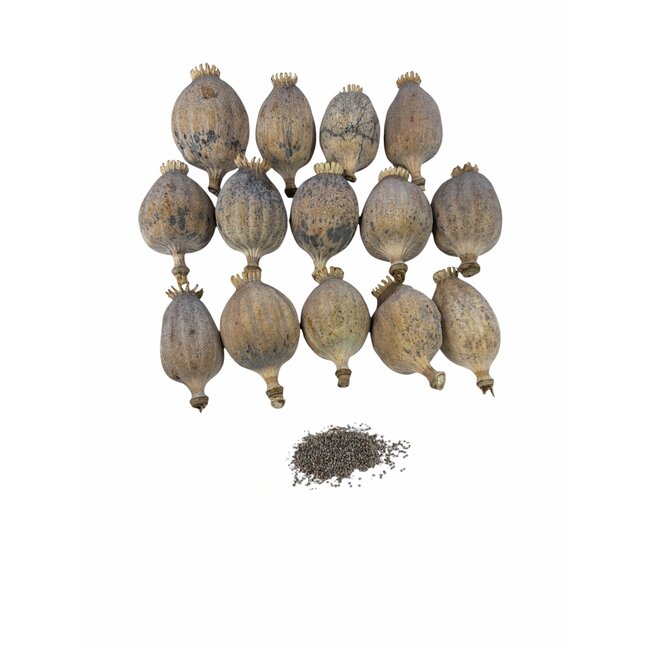
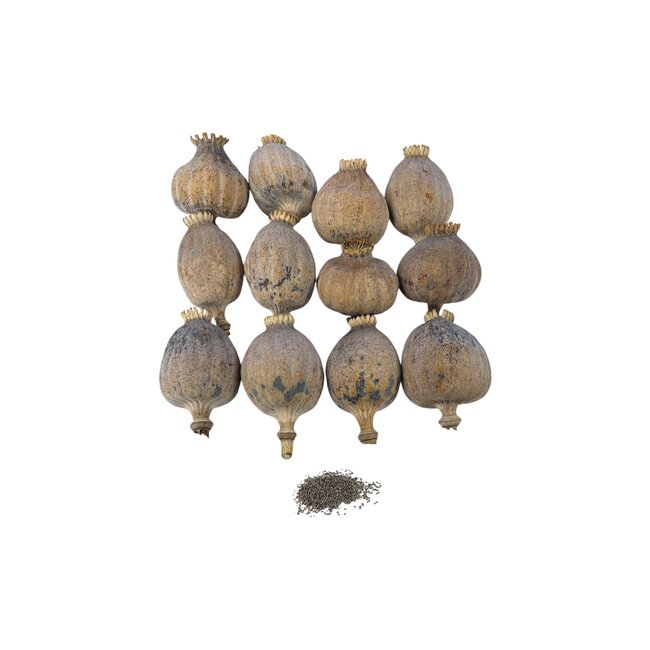
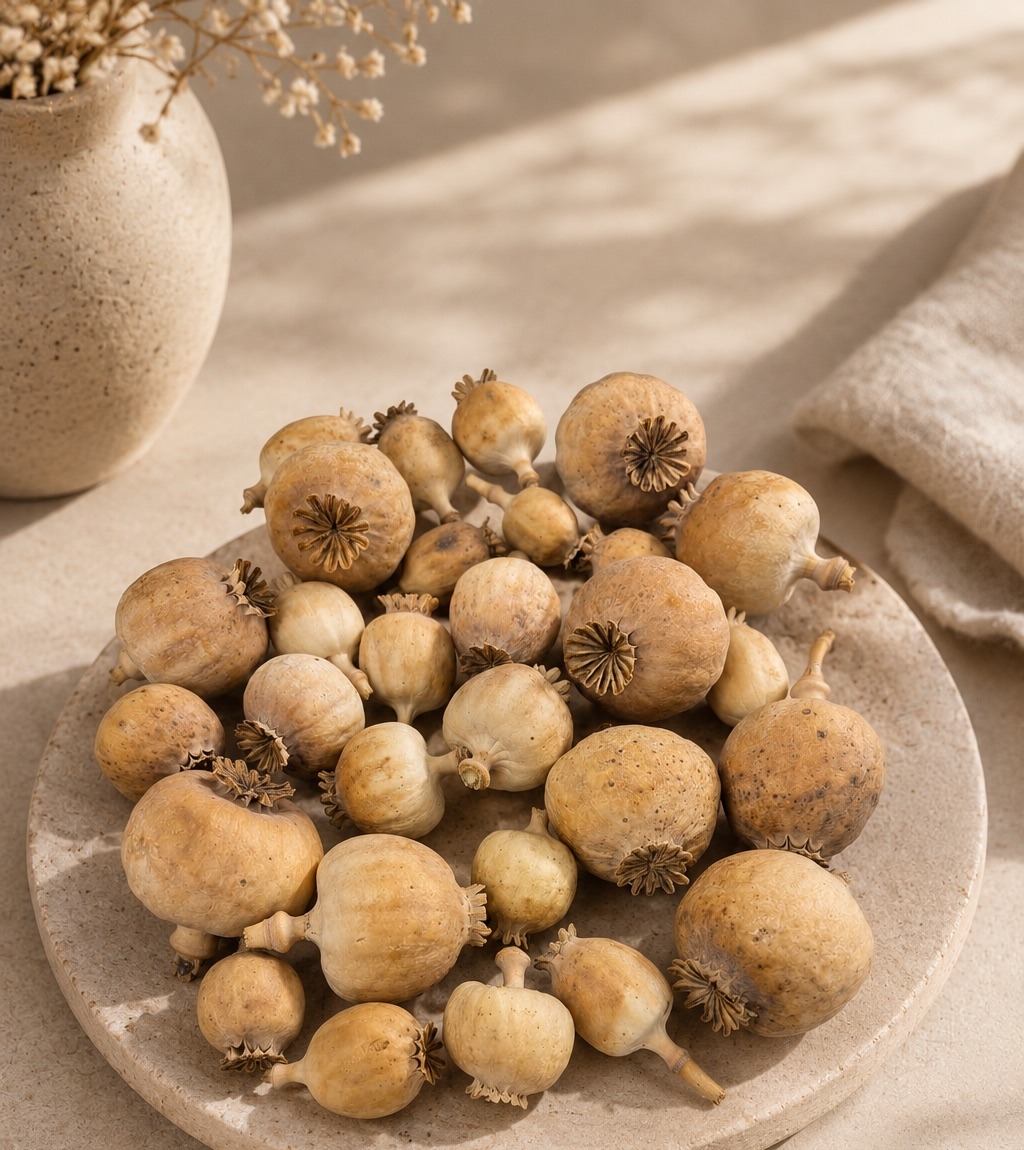
Dried does not mean unchanging. A poppy pod is still plant material, and it keeps ageing quietly after it is cut. Colour is the first thing to go — the warm bone-and-straw tone drifts greyer and flatter with each year in storage, especially anywhere it catches light. Then the wall of the pod loses a little of its spring, and the crown of an old pod chips more easily when you handle it.
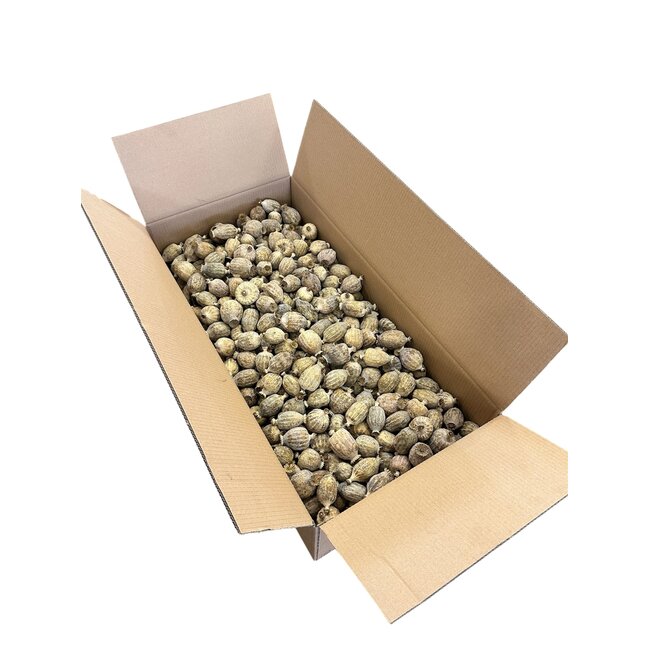
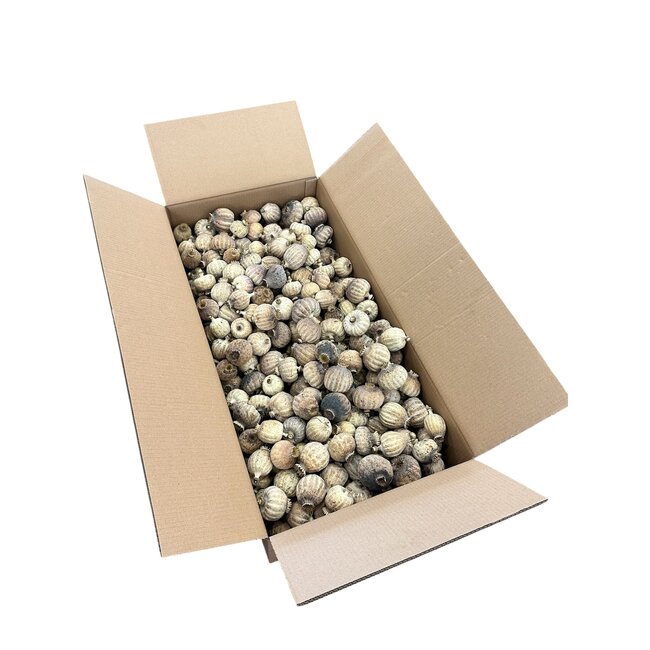
None of that makes a two- or three-year-old pod unusable. It does mean that the pod you arrange in a bowl this winter looks noticeably better if it was standing in a field a few months ago. It is a fair question to put to anyone selling dried botanicals, and a surprising number of sellers cannot answer it, because stock is bought in bulk and drawn down over several seasons.
Dried is not frozen. Ask what year it was cut — you can see the difference in the colour.
The Dutch fields
The XL and XXL grades are the ones we grow here. That was not a marketing decision; it was a practical one. The biggest heads are also the most fragile in transit — broad crowns, thin walls, and a shape that does not pack tightly. Every extra border a pallet crosses is another chance for the grade you paid a premium for to arrive as the grade below it.
Growing them close by removes most of that. It also means we see the crop rather than a specification sheet: which fields came up well, how the drying went, what the real yield of oversized heads was this year. That last point matters more than it sounds, because only a small share of any crop grows large enough to make XXL at all.