Everlasting botanicals · dispatched in 2–4 days, shipped across Europe · lasts for years, needs no water
House of Papaver
Occasions · 6 min read

The Punjabi poppy, asked for by name

Of everything we dry, one pod gets requested by name more than any other — and almost always by the kilo.

Most people who come to us describe what they want. A colour, a height, something for a hallway. Then there is one group who does not describe anything at all — they name it. Punjabi poppy pods, they write, and usually: how much for a kilo?

It is the single most requested thing we dry, and the request arrives the same way from Birmingham, Bergamo, Rotterdam and Frankfurt. Once you have seen what it is for, the pattern makes sense.

What the name actually describes

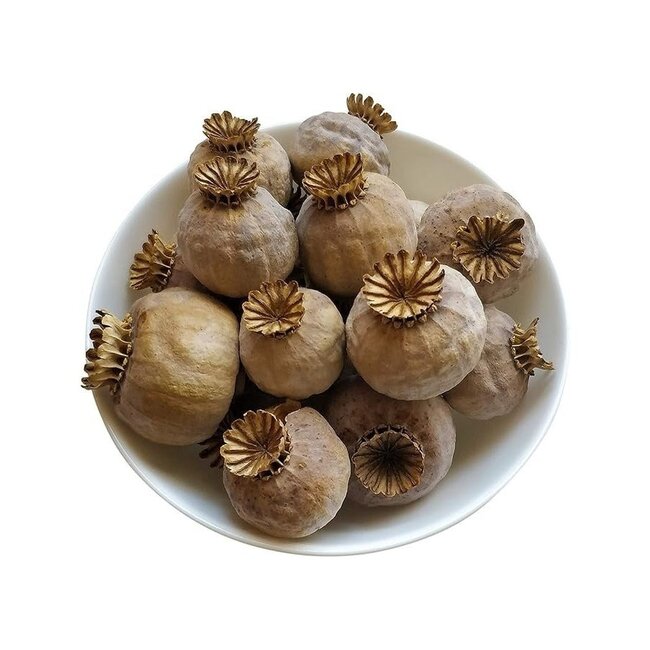
A word on this first, because it is a fair question: the name describes a style of pod, not a place of origin. Ours are grown and dried in the old poppy-growing regions of Austria and Hungary, then sorted by hand here, and everything we ship now is from the 2026 harvest. What makes them the pod Punjabi households ask for is the form — large, round, firm-shouldered heads with a clean crown and a strong stem scar, closer to a small sculpture than to a flower.

That is a real distinction, not a marketing one. A lot of dried poppy on the market is small, thin-walled and slightly collapsed, which is fine scattered through a bouquet and disappointing in a bowl on its own. These hold their shape and their weight. They read as objects.

Where they end up

Overwhelmingly: celebrations. A Punjabi wedding is not decorated modestly, and it is not decorated once — there is the engagement, the mehndi, the sangeet, the wedding itself, each with its own room to fill. Then Vaisakhi in April, Diwali in autumn, and the run of family events in between.

That rhythm is exactly why dried works better than fresh here. Fresh flowers for a five-event wedding are five separate purchases, five deliveries, and five mornings of hoping nothing wilted overnight. A box of pods is one purchase that gets unpacked, arranged, boxed again and brought back out in April. Families who decorate several times a year work this out quickly, which is why the orders arrive by the kilo rather than by the bunch.

Bought once, unpacked at every celebration for years — that is the whole appeal.

There is a visual logic too. Phulkari — literally flower work — puts dense floral geometry in saffron, deep red and gold against a plain ground. Poppy pods sit naturally in that language: repeated round forms, warm natural tone, structure rather than softness. They look at home next to marigold and gold without competing with either.
Shop this story

The largest grades we sell — XL and XXL — are a separate story: those are grown here in the Netherlands, and we wrote about this year’s harvest and where it came from separately.

Choosing a size

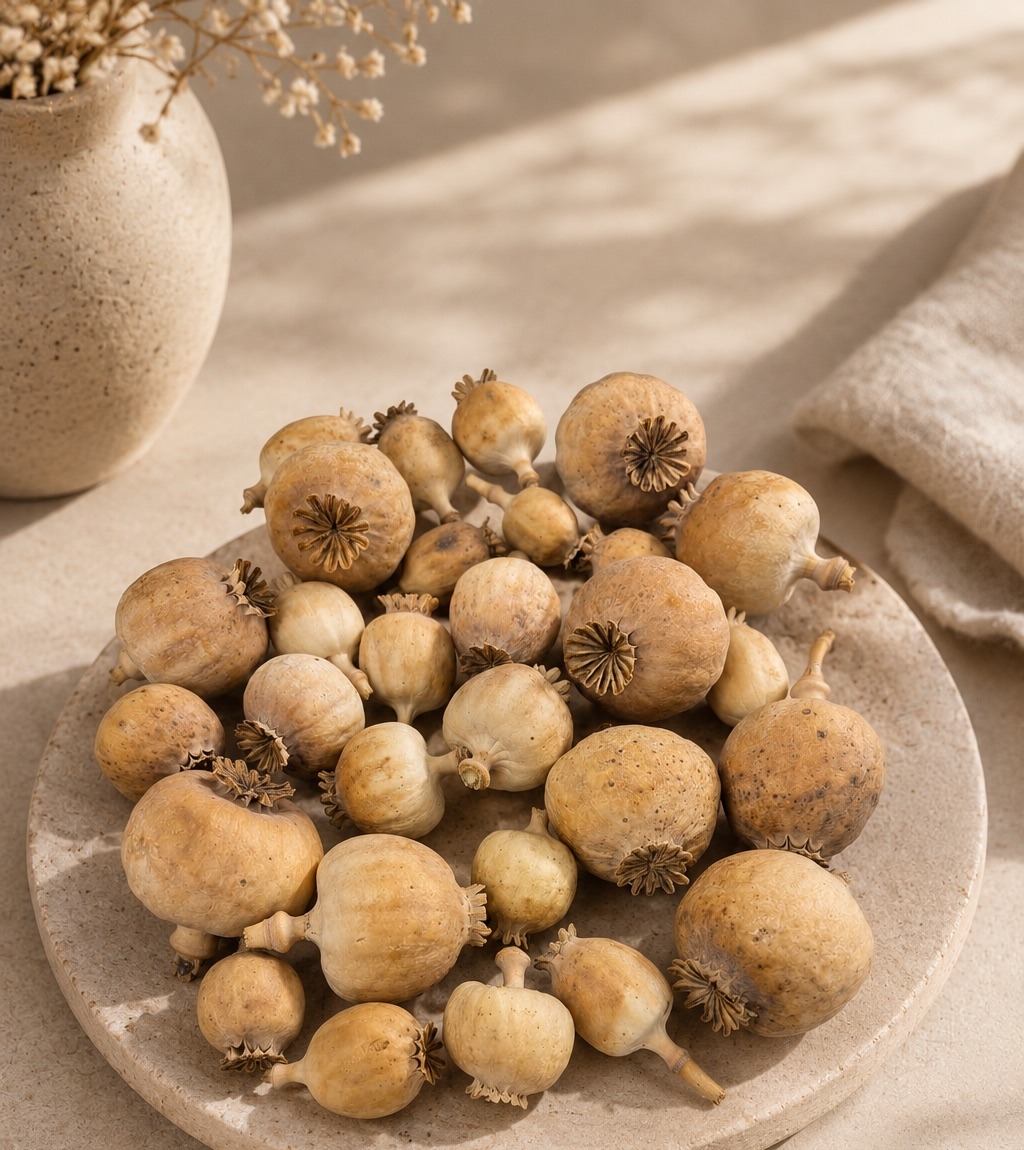
Large, around 3 cm across, is the everyday choice: generous in a bowl, still in proportion on a mantelpiece or a dining table. Extra Large, around 4 cm, is what you want when the pod is doing the work by itself — a tall floor vase, a stage backdrop, an entrance table people walk past rather than sit at. Mix gives you both, which is the practical answer when the same box has to cover a big room and a small one.

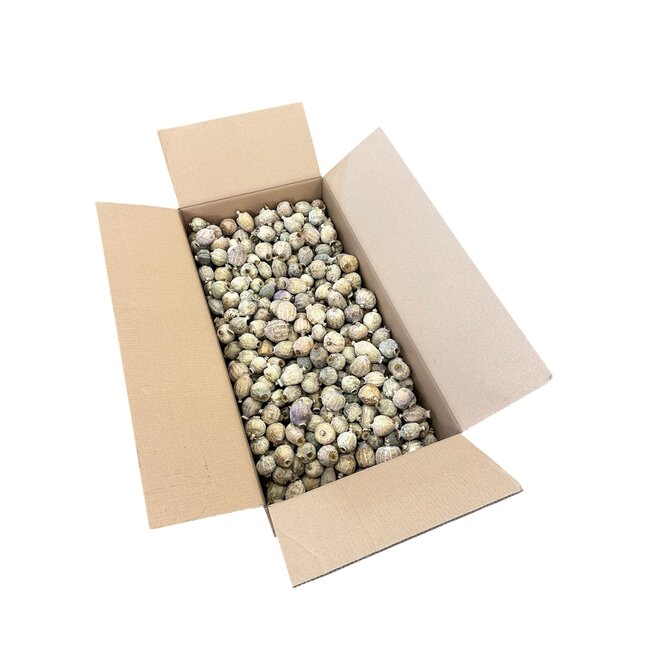
For quantity, the honest rule is that people underestimate. A kilo is a full, well-filled bowl or one generous vase. A single table centrepiece runs a kilo or two. A whole room — entrance, mantel, two tables — is where the 4.2 kg box stops being a splurge and starts being the cheaper way to buy it.

Styling them

Pods reward repetition. One pod is a curiosity; forty in a shallow brass or ceramic bowl is a composition, and it needs nothing else added to it. Where they go wrong is in half-measures — a thin scatter across a table reads as leftovers.

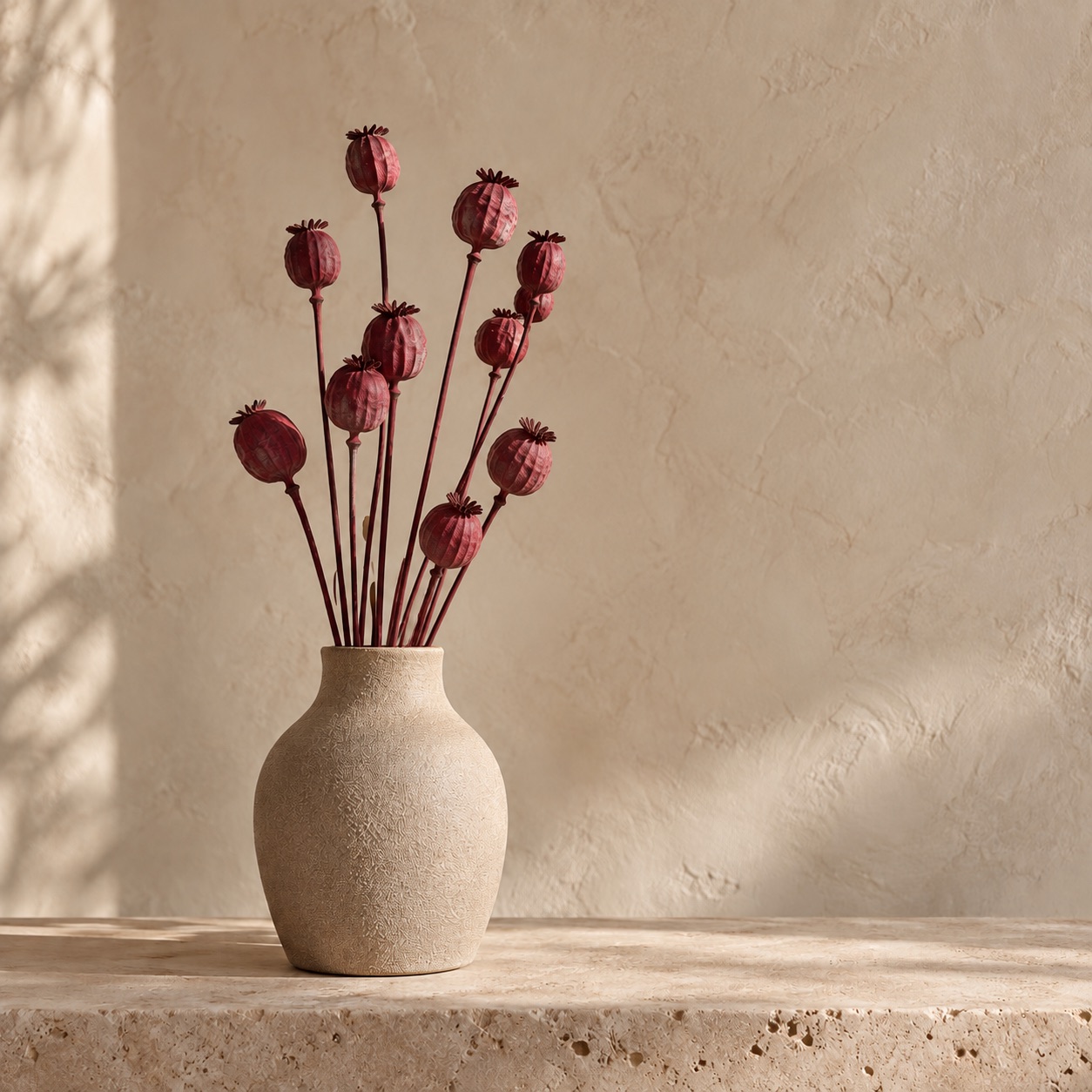
On stems, treat them like architecture rather than like flowers. Odd numbers, varied heights, a heavy vessel that can take the top weight, and no attempt to fill the gaps. The negative space between the heads is the point; crowd them and you lose the silhouette that made you want them.

They take warm light beautifully, which matters for evening events. Set them where candles or lamps will rake across them from the side and the ribbing on each pod picks up a shadow line. Under flat overhead light they go slightly dull.

What they are, plainly

These are dried, seedless, decorative pods, sold for floristry and interiors — the same aisle as pampas, palm and dried hydrangea. They are not food, not a tea, not an ingredient, and we do not sell them as any of those things. Keep them dry, handle them gently, and they will outlast the event you bought them for by several years.

Which, in a house that decorates for something every few months, turns out to be the whole argument.

→ All storiesShop the collection →
Shop the story

Take it home

Shop all →