The appeal of dried flowers is that they ask for almost nothing. Almost — not quite nothing. A few small habits are the difference between a piece that looks tired within a year and one that holds its beauty for many. None of them takes more than a minute.
Keep them dry
Damp is the one real enemy of dried botanicals. Moisture softens stems, encourages drooping and, over time, can invite mould. Keep arrangements out of the direct path of a steamy shower and away from the splash of a kitchen hob. Dried flowers can absolutely live in a bathroom — they are wonderful there — but give them a spot the spray does not reach, and open a window now and then.
Out of harsh, direct sun
Strong, direct sunlight fades natural colour over months. Bright, indirect light is perfectly fine and shows the textures beautifully. If the only home for a piece is a sunny sill, simply give it a quarter turn every few weeks so any fading happens evenly across the whole arrangement rather than on one face.
Dust, gently
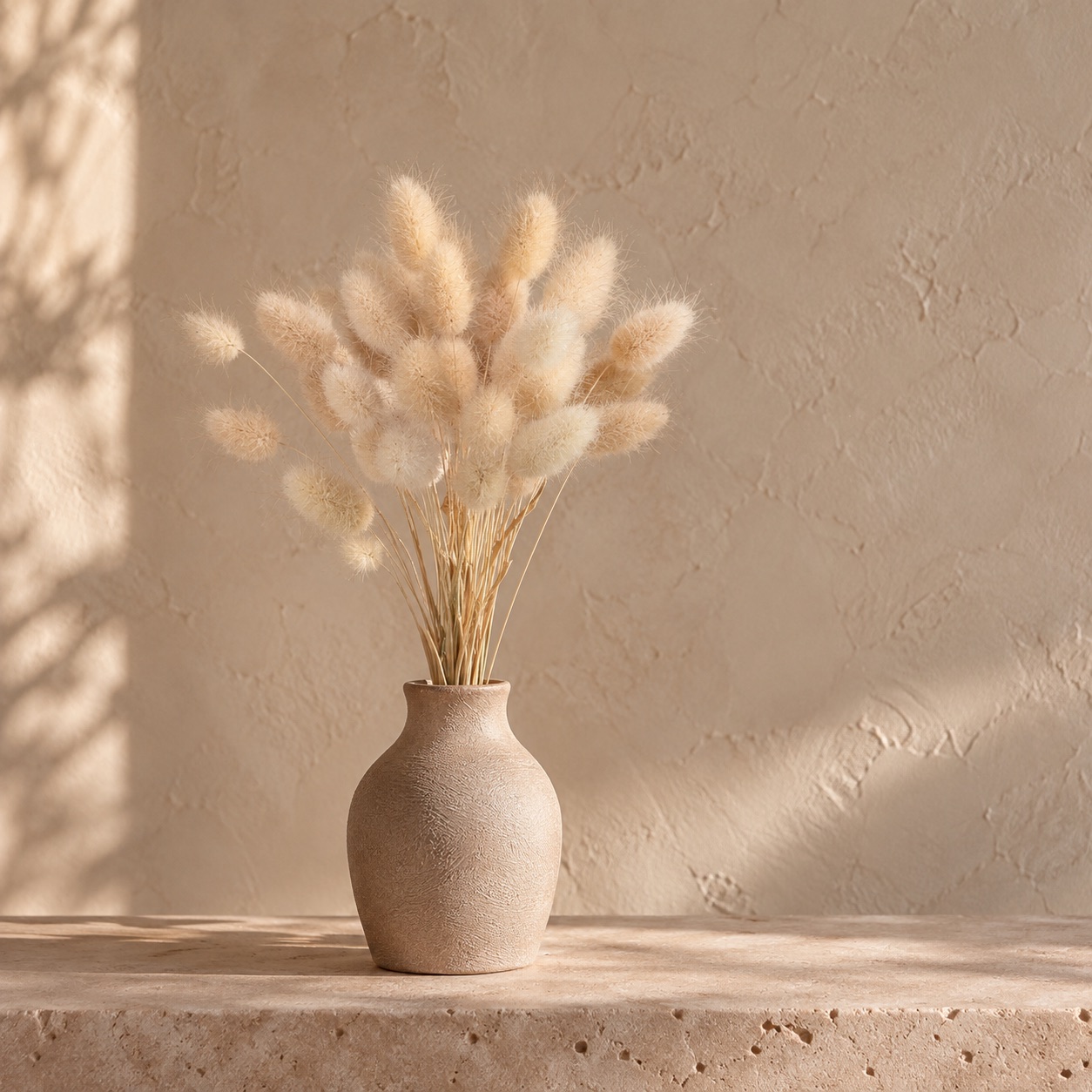
The most common way a dried arrangement loses its glow is simply dust. Once every few weeks, lift it away with a soft, dry brush, a clean make-up brush, or a feather duster. For fuller stems like pampas, a hairdryer on its coolest and lowest setting, held at a distance, lifts dust without bruising the fronds. Never use water, and never wipe — dried petals do not forgive a damp cloth.
Handle with a light touch
Dried stems become brittle — that is simply the nature of the material. When you move a piece, lift it by the base of the stems rather than the heads, and give crowded arrangements a little room so they are not forever knocking against one another. Pampas and grasses can be reshaped gently by hand if they flatten in storage; a soft shake brings them back.
Dried botanicals ask for a soft brush now and then, and almost nothing else.
On shedding and small imperfections
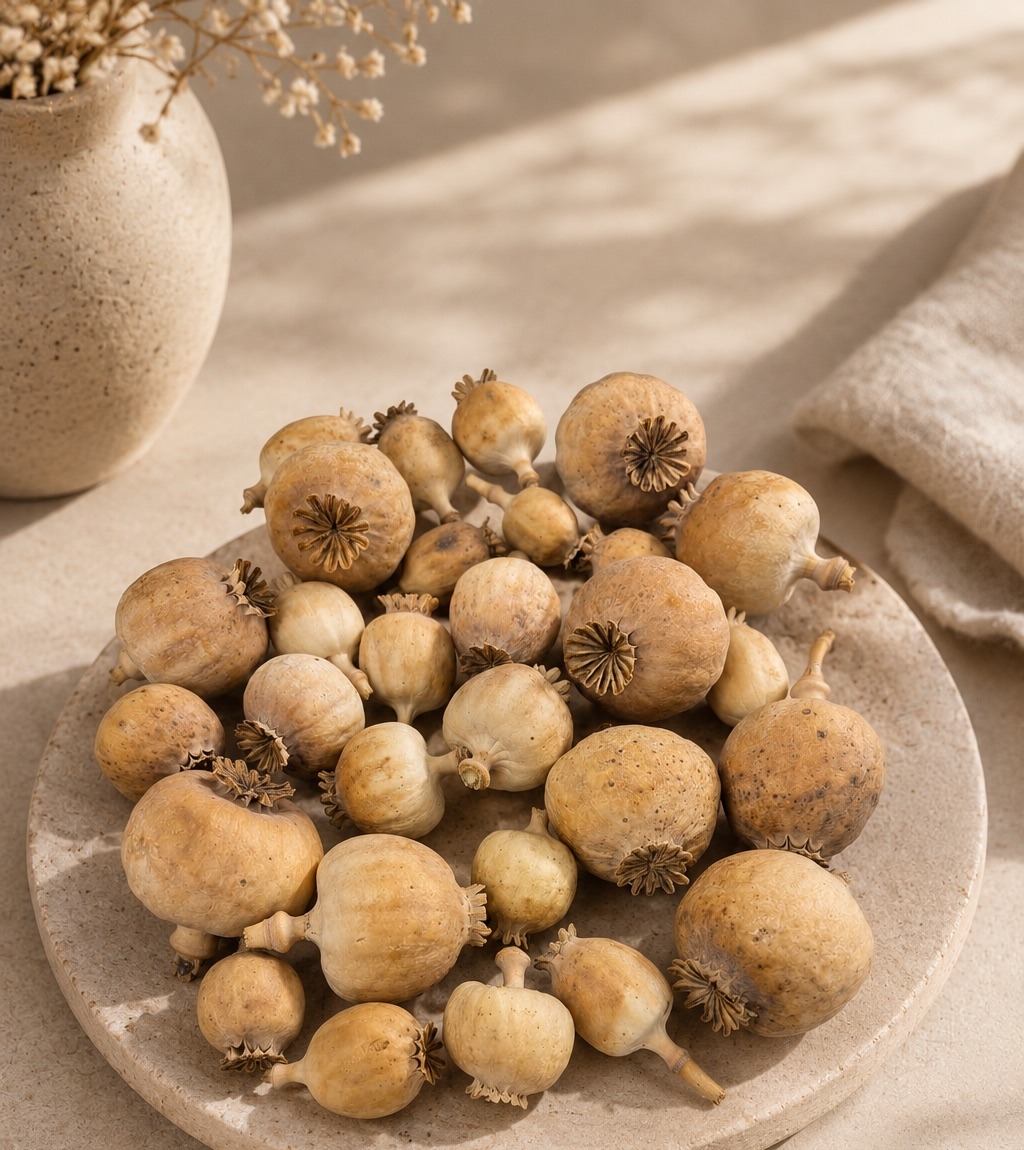
A little shedding — a wisp of pampas, a fine dusting from a grass — is normal, especially in the first weeks, and settles down. So is variation from stem to stem: no two poppy heads are identical, no two grasses catch the light the same way. That is the material speaking, not a flaw. It is exactly what a real, natural, once-living thing is meant to look like.