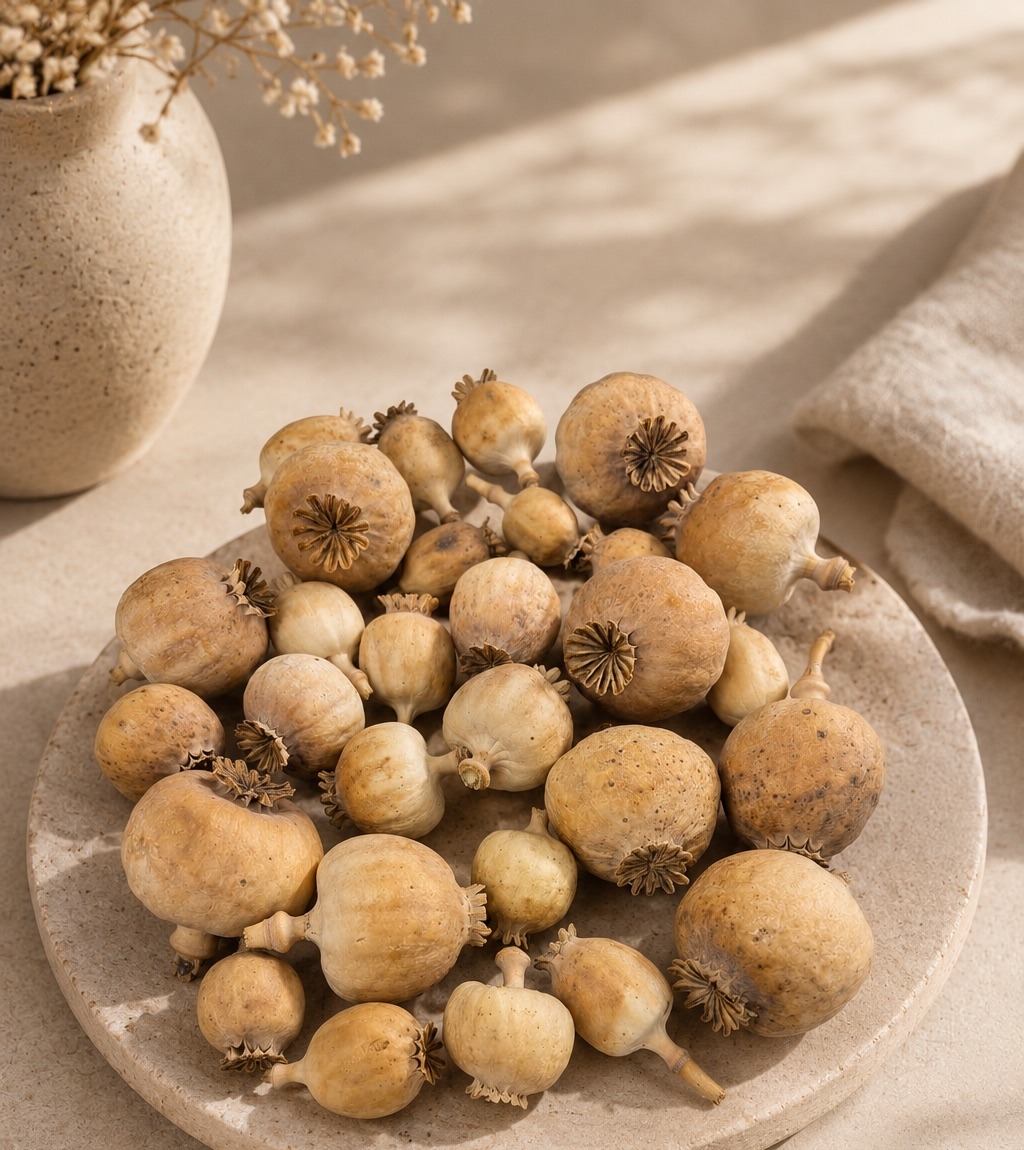
A dried poppy is not a bouquet you arrange once and forget. It is an object — sculptural, made to last for years — and like any good object, it earns its place by how you set it down. The same bundle behaves like three different pieces depending on the vessel that holds it and the light that finds it.
Here is how we style our Sindoor Poppy Bundle three ways, in three rooms, without buying anything else botanical. One material, three moods.
1 · On the mantel, standing tall
Give the poppies height and let them be the only gesture in the room. A tall, stone-toned vessel lifts the pods to eye level, where their architecture reads clearly against a plain wall. Keep the stems long, keep the count generous, and resist the urge to add anything green — the whole point is the silhouette.
This is the arrangement for a room that is otherwise quiet: warm neutrals, a little morning light, nothing competing. The poppies do the talking.
2 · Low, on a stack of books
Trim the stems short and move the bundle to a low, narrow bottle on a coffee table or a stack of art books. Suddenly the same pods feel intimate rather than architectural — a still life you look down into rather than up at. Cluster three or five pods, not ten; at close range, restraint reads as considered.
The room stays quiet. The poppy is the one thing that speaks.
3 · Alone, in the bathroom
The room most people forget is the one where dried botanicals earn their keep. A bathroom has no light for a living plant and too much damp for cut flowers — but a few poppy stems in a slim vessel bring warmth to all that hard tile and stone, and ask for nothing in return. Keep them away from the direct spray of the shower and they will hold for years.
Keeping them beautiful
Dried poppies want three things: to stay dry, to stay out of harsh direct sun, and to be dusted now and then with a soft brush or a cool hairdryer on its lowest setting. No water, no wilting, no weekly replacing. Every pod is a little different — that is the material, not a flaw.